
Your doctor’s words echo in your mind: “You need to make some dietary changes.” Whether managing blood pressure, improving cholesterol, or losing weight, the message is clear that what you’re eating matters.
The prevailing myth is that eating healthy requires sacrificing flavor, satisfaction, and convenience. You’ve probably heard success stories of people eating plain chicken and broccoli day after day, or trying restrictive diets that work for exactly two weeks before hunger wins out.
What if that entire premise is wrong? The truth is that whole foods prepared well taste better than takeout, and health and deliciousness aren’t opposing forces when you know what to cook.
Throughout this guide, you’ll discover 10 healthy dinner recipes that prove nutritious eating can be delicious and sustainable. These meals prioritize flavor alongside nutrition because eating well requires enjoying the food you’re actually eating.
Why Healthy Dinner Recipes Matter More Than You Think
You might assume that eating healthier requires enormous effort and sacrifice that you’re not sure you can maintain. The reality is that healthy eating becomes sustainable only when the food tastes genuinely good and fits into your actual life.
Dinner is your most impactful meal because it happens when you’re already tired from the day. Having reliable healthy recipes means you’re not scrambling for unhealthy shortcuts when your willpower is depleted.
The compounds effects of consistent healthy eating are substantial. Better sleep comes from proper nutrition, which creates more energy for workouts, which improves your mood and stress management, which makes it easier to maintain healthy eating. One positive habit starts a cascade of improvements.
Your body transforms measurably when you consistently feed it real, whole food. Beyond the scale, you’ll notice better digestion, more stable energy throughout the day, improved sleep quality, and enhanced mental clarity that takeout and processed foods simply cannot provide.
Also read: Easy Dinner Ideas: 20+ Quick Recipes for Busy Families
What Makes a Dinner Recipe Truly Healthy?
Understanding what actually qualifies as healthy helps you evaluate recipes critically rather than falling for marketing claims on processed “health” foods. Healthy dinners combine whole food ingredients, balanced macronutrients, and cooking methods that preserve nutrition.
A truly healthy dinner includes adequate protein to keep you satisfied, plenty of vegetables for vitamins and fiber, whole grains or complex carbs for sustained energy, and healthy fats for nutrient absorption and satiety. The combination creates meals that actually satisfy rather than leaving you hungry an hour later.
Healthy doesn’t mean low-calorie or restricted. It means food that nourishes your body, supports your goals, and tastes good enough that you’ll eat it consistently. If a recipe is so restrictive or unpalatable that you abandon it within days, it’s not healthy for your life.
The cooking methods matter significantly. Grilling, roasting, steaming, and baking preserve nutrients while avoiding excess added fats. These methods create flavorful meals without requiring heavy sauces or deep-frying.
10 Healthy Dinner Recipes That Actually Taste Good
The recipes that follow are organized by dietary approach so you can choose based on your preferences and goals. Some emphasize protein, others focus on plant-based options, and some prioritize calorie control without sacrificing nutrition.
By organizing this way, you’re building a toolkit of meals that align with your actual health goals. This personalization is what transforms healthy eating from a chore into something you genuinely look forward to.
High-Protein Healthy Dinners
Grilled Lemon Herb Salmon with Roasted Vegetables
Grilled salmon is a nutritional powerhouse that tastes elegant enough for special occasions yet simple enough for busy weeknights. You start by marinating salmon fillets in lemon juice, fresh herbs like dill and parsley, and a touch of olive oil for about 10 minutes. While the salmon marinates, toss broccoli, bell peppers, and zucchini with olive oil and roast them at 400 degrees.
Grill the salmon for about 4 minutes per side until it’s flaky and cooked through. The entire meal comes together in approximately 20 minutes, yet delivers impressive omega-3 fatty acids, lean protein, and antioxidants from vegetables. Each serving contains roughly 400 calories, 40 grams of protein, and abundant vitamins that support heart health and brain function.
Grilled Chicken Breast with Quinoa and Steamed Broccoli
Grilled chicken breast is perhaps the most versatile healthy protein available, working for weight loss, muscle building, or simple health maintenance. Pound the chicken thin before grilling (about 5 minutes total) so it cooks quickly and evenly, emerging tender rather than dried out. While the chicken cooks, steam broccoli until it’s tender-crisp and cook quinoa using a simple 1:2 ratio with water.
This meal is nutritionally complete, containing all nine essential amino acids from the quinoa combined with lean protein from chicken. Each serving provides approximately 450 calories with an impressive 45 grams of protein and complex carbohydrates that support sustained energy. The simplicity of preparation makes this a meal you can produce even on your most exhausted days.
Turkey Meatballs with Zucchini Noodles
Turkey meatballs represent a leaner, lower-fat alternative to traditional beef versions while maintaining satisfaction and flavor. Combine ground turkey with herbs, a small amount of breadcrumbs, and an egg, then form into meatballs and pan-fry until browned on all sides. The brief cooking preserves the texture while developing a flavorful exterior.
Serve over spiralized zucchini noodles (which take literally 30 seconds to prepare with a spiralizer) with a simple tomato sauce. This meal is exceptionally low in calories and carbs while providing substantial protein that keeps you satisfied for hours. Each serving contains approximately 320 calories and an impressive 35 grams of protein, making it perfect for people focused on weight loss without feeling hungry.
Baked Tilapia with Sweet Potato and Green Beans
White fish like tilapia is an underrated healthy protein that cooks quickly and provides lean nutrition without the strong fish flavor some people dislike. Place tilapia fillets on parchment paper, season with lemon and herbs, and bake at 400 degrees for about 12 minutes. In the same oven, roast sweet potato wedges and green beans tossed with minimal olive oil.
This meal is nutritionally balanced with moderate protein, complex carbohydrates from sweet potato that provide sustained energy, and green beans for vitamins and fiber. Each serving contains approximately 380 calories with 30 grams of protein, making it satisfying without being heavy. The simplicity of preparation makes this particularly valuable for people who find healthy eating overwhelming.
Plant-Based Healthy Dinners
Buddha Bowl with Roasted Chickpeas
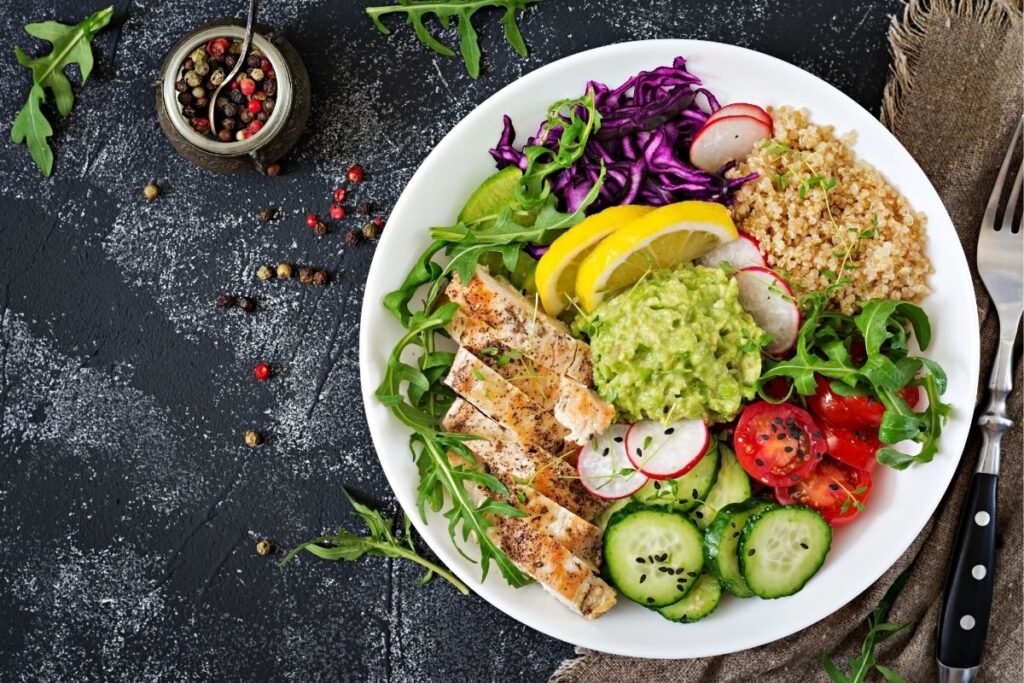
Buddha bowls represent the perfect vehicle for plant-based nutrition because you can customize components based on what you have available. Start with a base of mixed greens or cooked quinoa, then add roasted chickpeas that you’ve tossed with spices and baked at 400 degrees until crispy. Add colorful vegetables like roasted sweet potato, raw cucumber, shredded carrots, and cherry tomatoes.
Finish with a tahini-based dressing made from tahini, lemon juice, garlic, and water. This meal provides complete protein from the combination of chickpeas and grains, fiber for digestive health, and minerals like iron and magnesium. Each serving contains approximately 480 calories with 18 grams of protein, making it satisfying and nutritionally complete for vegetarian or vegan eating.
Lentil and Vegetable Curry
Lentils are nutritional superstars that provide plant-based protein, fiber, and minerals while being incredibly economical. Create a simple curry by sautéing onions and garlic, adding curry spices, canned tomatoes, and red lentils with vegetables like spinach and bell peppers. The entire meal simmers for about 25 minutes until the lentils are tender and flavors have melded beautifully.
This meal is deeply satisfying despite being plant-based, with the spices creating complex flavors that make it feel indulgent rather than restrictive. Each serving provides approximately 420 calories with 18 grams of protein and impressive amounts of fiber that support digestive health and sustained satiety. The flexibility of this recipe means you can easily adapt it based on vegetables you have available.
Tofu Stir-Fry with Brown Rice
Tofu’s versatility makes it perfect for stir-frying when you understand the technique of pressing it dry first to allow proper browning. Press tofu with paper towels, cut into cubes, and pan-sear at high heat until golden on multiple sides. This creates a texture that’s crispy outside and tender inside, transforming tofu from mushy to genuinely delicious.
Add high-heat cooking vegetables like broccoli, snap peas, and mushrooms along with aromatics like garlic and ginger. Season with soy sauce and sesame oil, creating a meal that tastes restaurant-quality in about 20 minutes. Each serving contains approximately 400 calories with 16 grams of plant-based protein and sustained energy from brown rice that you’ve cooked separately.
Black Bean and Quinoa Stuffed Bell Peppers
Stuffed peppers are visually impressive yet surprisingly simple to prepare, making them perfect for people wanting to feel proud of their healthy meals. Halve bell peppers, fill them with a mixture of black beans, cooked quinoa, diced vegetables, and spices, then bake at 375 degrees for about 25 minutes. The peppers become tender while the filling cooks through, creating a complete nutritional package.
Each serving contains approximately 420 calories with 15 grams of protein from the combination of beans and quinoa. The presentation makes this meal feel special enough for entertaining while being straightforward enough for busy weeknight cooking. The flexibility of filling ingredients means you can easily adapt this to include whatever vegetables you have on hand.
Low-Calorie Healthy Dinners
Grilled White Fish with Roasted Vegetables and Cauliflower Rice
White fish represents one of the leanest proteins available, making it ideal for people focused on calorie control without sacrificing nutrition. Grill white fish like cod or halibut for about 3 minutes per side, finishing with fresh lemon juice and minimal seasoning. The delicate flavor needs nothing more to be delicious.
Serve with roasted colorful vegetables (broccoli, zucchini, bell peppers) and cauliflower rice instead of traditional rice to dramatically reduce calories while increasing nutrients. Each serving contains approximately 280 calories with 35 grams of protein, making it exceptionally nutrient-dense for its calorie content. This meal demonstrates that calorie control doesn’t require restrictive portions or unappetizing food.
Zucchini Noodle Primavera with Chicken
Zucchini noodles provide a vegetable-based alternative to pasta that slashes calories without sacrificing satisfaction when paired with adequate protein. Spiralize fresh zucchini into noodle-like strands, then briefly cook them in a hot skillet to remove excess moisture. Pan-sear thin chicken cutlets until cooked through, then combine everything with cherry tomatoes, fresh basil, and a light olive oil dressing.
The entire meal comes together in about 15 minutes and provides approximately 320 calories with 40 grams of protein. The combination of vegetables and protein creates surprising satisfaction despite being remarkably low in calories. This meal proves that healthy eating for weight loss doesn’t require portion restriction that leaves you hungry.
Mediterranean Baked Chicken with Feta and Vegetables
Mediterranean-style cooking combines lean proteins with flavorful vegetables and a touch of healthy fats, creating meals that feel indulgent while supporting health goals. Bake chicken breast alongside cherry tomatoes, cucumber, red onion, and Kalamata olives, finishing with crumbled feta and fresh herbs. The combination creates complexity of flavor with minimal effort.
This meal balances all macronutrients appropriately, with protein from chicken and feta, healthy fats from olives and olive oil, and vegetables for vitamins and fiber. Each serving contains approximately 450 calories with 38 grams of protein, making it satisfying without being heavy. The Mediterranean approach teaches you that healthy eating includes flavorful fats and interesting ingredients rather than restriction.
Understanding Nutritional Information
When you understand nutrition basics, you can make informed choices rather than blindly following diet rules that might not work for your body. Protein should comprise roughly 25-35% of your calories, supporting muscle maintenance, satiety, and hormone function. Healthy fats (olive oil, avocados, nuts, fish) provide essential fatty acids and support nutrient absorption.
Complex carbohydrates from whole grains, sweet potatoes, and legumes provide sustained energy that processed carbs cannot match. Vegetables provide the vitamins, minerals, and antioxidants that create the foundation of long-term health. Understanding these basics helps you build balanced plates intuitively rather than obsessing over specific numbers.
Calorie awareness matters for weight loss, but obsessive calorie counting often backfires by creating anxiety around food and encouraging you to choose processed low-calorie options over whole foods. A reasonable approach involves being generally mindful of portions while prioritizing whole food ingredients. You’ll find that eating real food naturally results in appropriate calorie intake because these foods are more satisfying than processed alternatives.
Your individual needs vary based on activity level, metabolism, health conditions, and goals. Rather than following generic guidelines, pay attention to how different foods make you feel. Energy levels, digestion, sleep quality, and hunger patterns all provide valuable feedback about whether your eating approach is working.
Healthy Cooking Methods That Preserve Nutrition
Grilling develops flavorful crusts on proteins and vegetables while requiring minimal added fat, making it one of the healthiest cooking methods available. Heat creates browning reactions that add complex flavors without depending on heavy sauces or excess oil.
Roasting similarly uses dry heat to caramelize vegetables and proteins, creating concentrated flavors and appealing textures. Sheet pan roasting is particularly valuable because everything cooks together simultaneously with zero active attention required from you.
Steaming preserves water-soluble vitamins that other cooking methods might destroy, making it ideal for delicate vegetables and proteins. While steamed food can taste bland, adding fresh herbs, spices, and lemon juice afterward creates flavorful meals. Baking allows precise temperature control, making it reliable for cooking through without drying out.
Stir-frying at high heat cooks quickly, preserving nutrients while using minimal oil. The constant movement keeps food from sticking, allowing you to use much less fat than traditional pan-frying. These methods prove that healthy cooking doesn’t require sacrifice; it just requires understanding which techniques work best.
Meal Prep Strategies for Consistent Healthy Eating
Dedicating 2-3 hours on weekends to meal preparation creates enormous barriers to unhealthy choices during the week. Grill multiple chicken breasts, bake fish, cook ground turkey, and portion everything into containers so grabbing healthy dinner is as easy as reheating.
Roast vegetables on sheet pans while grains cook, allowing you to mix and match components throughout the week. Cook quinoa, brown rice, and sweet potatoes in bulk, storing them in separate containers for maximum flexibility. This component-based approach prevents meal boredom while keeping preparation manageable.
Prepare simple dressings and sauces that you can quickly combine with proteins and vegetables for variety. Labeling containers with contents and dates prevents food waste and keeps your refrigerator organized for easy access. When healthy eating requires zero decisions beyond opening the refrigerator, you’re far more likely to maintain it consistently.
Shopping List for Healthy Dinners
Stock lean proteins like chicken breast, ground turkey, salmon, tilapia, eggs, and tofu so you always have options available. Having multiple protein choices prevents boredom while accommodating different nutritional goals and dietary approaches.
Fill your vegetable drawers with leafy greens, cruciferous vegetables, bell peppers, mushrooms, zucchini, and asparagus. Include both fresh and frozen options because frozen vegetables are nutritionally equivalent while being economical and convenient.
Keep whole grains like quinoa, brown rice, sweet potatoes, and legumes on hand for complete meals. Quality olive oil, fresh herbs, garlic, and ginger form the flavor foundation of healthy cooking. These pantry staples allow you to create varied, flavorful meals using simple, whole ingredients.
Common Mistakes in Healthy Eating
Over-restricting calories or food groups often backfires by creating unsustainable deprivation that leads to abandoning healthy eating entirely. Healthy eating must include foods you actually enjoy, or it becomes another failed diet attempt.
Cutting out all fats is a common mistake because healthy fats are essential for nutrient absorption, satiety, and long-term health. Avoiding flavor in pursuit of “clean eating” makes food unpalatable and creates a scarcity mindset around treats.
Not eating adequate protein leaves you hungry despite eating enough calories, leading to subsequent overeating and poor choices. All-or-nothing thinking where one slip equals failure often derails otherwise successful efforts.
Not planning ahead means scrambling for meals when you’re tired and hungry, leading to unhealthy shortcuts. Comparing your journey to others’ creates unrealistic expectations and discouragement when your progress differs from someone else’s.
Tracking Progress Beyond the Scale
While weight loss is often the initial motivation for healthy eating, the scale doesn’t capture the full picture of your transformation. Improved energy levels, better sleep quality, enhanced digestion, and increased strength all represent real progress that the scale cannot show.
Notice how your clothes fit, how you feel climbing stairs, how clearly you think, and how stable your mood becomes. Lab work improvements like better cholesterol numbers, improved blood sugar control, or normalized blood pressure represent measurable health gains. These holistic measures of success support long-term motivation better than obsessive scale-watching.
Frequently Asked Questions About Healthy Dinner Recipes
What makes a dinner recipe truly healthy?
Healthy dinners combine whole food ingredients with balanced macronutrients and cooking methods that preserve nutrition. A truly healthy meal includes adequate protein for satiety, plenty of vegetables for vitamins and fiber, complex carbs for sustained energy, and healthy fats for nutrient absorption.
How can I lose weight with healthy dinner recipes?
Focus on high-protein meals that keep you satisfied, include plenty of vegetables for volume without excess calories, control portions appropriately, and choose sustainable eating patterns you can maintain long-term. The best weight loss approach is one you can actually stick with consistently.
Are healthy dinner recipes more expensive?
Not necessarily. Buying seasonal produce, choosing proteins on sale, and meal prepping reduce costs significantly. Frozen vegetables are nutritionally equivalent while being economical, and buying in bulk stretches your budget further.
How do I make healthy recipes taste genuinely good?
Use flavorful cooking methods like grilling and roasting, leverage fresh and dried herbs and spices, incorporate healthy fats for satisfaction, and focus on ingredient quality. Restaurant-quality healthy meals come from respecting your ingredients rather than heavy sauces.
Can I make healthy dinners for my family?
Absolutely. Most healthy recipes are family-friendly when served as component-based meals where everyone builds their own plate. Involving children in cooking and letting them choose vegetables increases their acceptance of healthier food.
What proteins are best for healthy dinners?
Lean options like chicken breast, fish, ground turkey, eggs, and tofu all provide excellent nutrition. Plant-based proteins like legumes, quinoa, and seeds offer complete nutrition for vegetarian approaches.
How do I balance macronutrients in healthy dinners?
Use a simple framework: a palm-sized serving of protein, two handfuls of vegetables, and one fist-sized serving of complex carbs. Adjust portions based on your individual goals and activity level.
Should I include healthy fats in dinner recipes?
Yes, healthy fats are essential for satiety, nutrient absorption, and overall health. Use olive oil, avocado, nuts, and fatty fish like salmon. These support both your health and your satisfaction with meals.
What are the healthiest cooking methods?
Grilling, roasting, steaming, baking, and stir-frying with minimal oil all preserve nutrients and avoid excess added fats. Air frying provides crispy results using a fraction of traditional oil.
How can I meal prep for healthy eating success?
Dedicate 2-3 hours on weekends to cooking proteins, roasting vegetables, and preparing grains. Divide into labeled containers for easy grab-and-go healthy dinners throughout the week.
Conclusion
Healthy dinner recipes prove that nutritious eating doesn’t require sacrifice, deprivation, or boring food. When you combine whole food ingredients, balanced nutrition, and proper cooking techniques, you create meals that taste genuinely delicious while supporting your health goals. The recipes in this guide demonstrate that sustainable healthy eating is absolutely achievable for your real life.
Start with one recipe that genuinely appeals to you, and commit to trying it this week. Build your toolkit gradually, learn which meals you actually enjoy eating repeatedly, and watch how consistent healthy cooking transforms not just your body, but your relationship with food and your overall wellbeing.